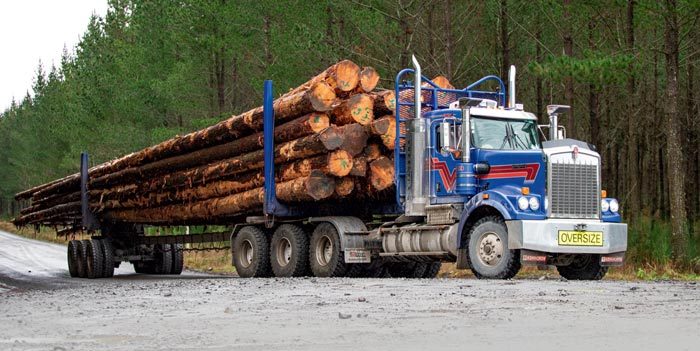
New Zealand’s forestry industry places unique demands on heavy transport equipment. Logging trucks frequently move between forest roads, regional routes and major highways while carrying substantial loads over changing terrain. For trailer operators, that makes the choice of trailer axles an important part of building a combination that can handle demanding day-to-day work.
From Forest Track to State Highway
A logging trailer rarely operates in one environment. A journey may begin on an unsealed forestry road before moving onto winding rural routes and higher-speed sealed roads.
Those changing conditions can expose axle and suspension systems to repeated vibration, uneven surfaces and constant changes in load forces. Equipment suited to this type of work needs to deliver reliable performance across the entire journey, rather than simply performing well on smooth highways.
Selecting trailer axles for forestry applications therefore requires operators and trailer builders to consider the complete operating environment.
Loads That Keep Changing
Logging transport can involve significant variation in load distribution depending on log length, trailer configuration and how the load is positioned.
Correct axle specification helps distribute weight effectively across the trailer and supports predictable handling under load. Axle capacity should be considered alongside the suspension, braking system, tyres and overall trailer design rather than treated as an isolated component.
Weight is another consideration. Reducing unnecessary tare weight can potentially create more flexibility for payload while helping operators make better use of the overall combination.
Corners Put Equipment to Work
New Zealand’s forestry regions often involve tight access roads and winding routes. Multi-axle trailers travelling through these conditions can experience tyre scrub and additional forces during frequent turning.
Depending on the trailer design and application, steering axle configurations may help improve manoeuvrability and reduce the resistance created when multiple fixed axles negotiate tighter corners.
The best configuration will depend on factors including trailer length, axle spacing, route characteristics and the way the combination is used.
Dirt, Dust and Downtime
Forestry vehicles spend significant time around mud, dust and debris. These conditions make maintenance planning particularly important.
Axles, suspension components, braking systems and tyres should be inspected regularly for unusual wear or damage. Operators should also pay attention to uneven tyre wear, unexpected vibration or changes in trailer tracking, as these may indicate alignment or component issues.
Choosing trailer axles designed for demanding commercial transport is only part of the equation. Regular inspection and correct servicing remain essential for maintaining reliable performance.
Built Around the Job
There is no single axle configuration that suits every logging operation. A trailer operating primarily between established processing facilities may have very different requirements from equipment regularly travelling deep into forestry sites.
Payload, route conditions, manoeuvrability, maintenance requirements and total trailer configuration should all influence the decision.
For New Zealand forestry operators, matching the axle system to the actual work can support greater reliability, more efficient operation and a trailer that is better prepared for everything from rugged forestry roads to long-distance highway transport.
